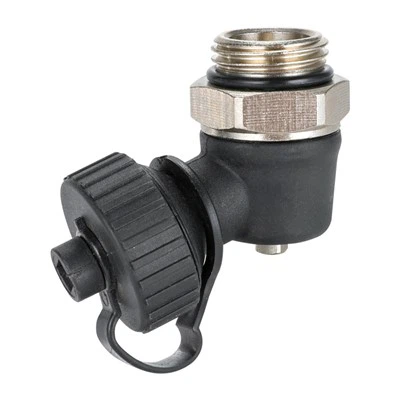
As a supplier of Brass Drain Valves, I've had the privilege of delving deep into the mechanics and functionality of these essential components. In this blog, I'll take you through the inner workings of a brass drain valve, explaining how it operates and why it's a crucial part in various systems.
The Basics of a Brass Drain Valve
Before we dive into the working mechanism, let's understand what a brass drain valve is. A Brass Drain Valve is a valve made primarily of brass, a metal alloy composed mainly of copper and zinc. Brass is favored for its excellent corrosion resistance, durability, and strength, making it ideal for applications where it will come into contact with water or other fluids.
These valves are commonly used in a wide range of systems, including plumbing, heating, ventilation, and air conditioning (HVAC), and industrial processes. Their main function is to allow the controlled release of fluids, such as water, condensate, or other liquids, from a system when needed.
Components of a Brass Drain Valve
A typical brass drain valve consists of several key components:
- Valve Body: This is the main housing of the valve, usually made of brass. It provides the structure and contains the other components. The valve body has an inlet and an outlet, through which the fluid flows.
- Sealing Mechanism: This can be a rubber or other elastomeric seal that prevents fluid from leaking when the valve is closed. The quality of the sealing mechanism is crucial for the valve's performance, as a poor seal can lead to leaks and inefficiencies.
- Actuating Device: This is the part that allows the user to open or close the valve. It can be a handle, a lever, a screw, or an automated actuator in the case of more advanced valves.
- Internal Passageways: These are the channels inside the valve body that direct the flow of fluid. The design of these passageways can affect the valve's flow rate and pressure drop.
How a Brass Drain Valve Works
The operation of a brass drain valve can be divided into two main states: the closed state and the open state.
Closed State
When the valve is in the closed state, the sealing mechanism is pressed against the valve seat, creating a tight seal that prevents fluid from flowing through the valve. The actuating device, such as a handle or a screw, is in a position that keeps the sealing mechanism in place.
For example, in a simple screw-type brass drain valve, turning the screw clockwise tightens the sealing mechanism against the valve seat, closing the valve. The force applied by the screw compresses the seal, ensuring that there is no leakage.
Open State
To open the valve, the user operates the actuating device to move the sealing mechanism away from the valve seat. This creates a gap through which the fluid can flow.
In the case of the screw-type valve, turning the screw counterclockwise loosens the sealing mechanism, allowing fluid to pass through the internal passageways and out of the valve. The flow rate of the fluid depends on several factors, including the size of the valve, the pressure of the fluid in the system, and the size of the gap created when the valve is opened.
Types of Brass Drain Valves and Their Working Principles
There are several types of brass drain valves, each with its own unique working principle.
Ball Valve
A ball valve uses a ball with a hole in the middle as the sealing mechanism. When the valve is closed, the ball is rotated so that the hole is perpendicular to the flow of fluid, blocking the passage. To open the valve, the ball is rotated 90 degrees so that the hole aligns with the inlet and outlet, allowing fluid to flow through.
Ball valves are known for their quick and easy operation, as well as their excellent sealing performance. They are often used in applications where a high flow rate is required and where the valve needs to be opened and closed frequently.
Globe Valve
A globe valve has a disc-shaped sealing mechanism that moves up and down to open and close the valve. When the valve is closed, the disc is pressed against the valve seat, blocking the flow of fluid. To open the valve, the disc is lifted up, allowing fluid to pass through the valve.
Globe valves are commonly used in applications where precise control of the flow rate is required. They can provide a more gradual opening and closing compared to ball valves, which makes them suitable for systems where sudden changes in flow can cause problems.
Check Valve
A check valve is a type of valve that allows fluid to flow in only one direction. It has a flap or a ball that is pushed open by the pressure of the fluid when it flows in the correct direction. When the fluid tries to flow in the opposite direction, the flap or ball is pushed against the valve seat, preventing the reverse flow.
Check valves are often used in systems where backflow prevention is necessary, such as in plumbing systems or in industrial processes where the mixing of different fluids can be dangerous.
Advantages of Using Brass Drain Valves
There are several reasons why brass drain valves are a popular choice in many applications:
- Corrosion Resistance: Brass is highly resistant to corrosion, especially in water and other aqueous environments. This means that brass drain valves can last for a long time without rusting or deteriorating, reducing the need for frequent replacements.
- Durability: Brass is a strong and durable material, capable of withstanding high pressures and temperatures. This makes brass drain valves suitable for use in a wide range of industrial and commercial applications.
- Good Sealing Performance: The combination of a high-quality sealing mechanism and the brass valve body ensures that brass drain valves provide a reliable seal, preventing leaks and ensuring efficient operation.
- Easy to Install and Maintain: Brass drain valves are relatively easy to install and maintain. They can be easily connected to pipes using standard fittings, and most valves can be serviced or repaired without the need for specialized tools.
Comparison with Other Types of Drain Valves
While brass drain valves have many advantages, it's also important to consider other types of drain valves, such as Nylon Drain Valve.
Nylon drain valves are made of nylon, a synthetic polymer. They are lightweight, inexpensive, and resistant to certain chemicals. However, they may not be as durable as brass drain valves, especially in high-pressure or high-temperature applications. Nylon can also be more prone to wear and tear over time, which may affect the valve's sealing performance.
In general, the choice between a brass drain valve and a nylon drain valve depends on the specific requirements of the application, such as the type of fluid, the pressure and temperature conditions, and the budget.


Conclusion
Brass drain valves are essential components in many systems, providing a reliable and efficient way to control the flow of fluids. Their corrosion resistance, durability, and good sealing performance make them a popular choice for a wide range of applications.
Whether you're in the plumbing, HVAC, or industrial sector, understanding how a brass drain valve works can help you make informed decisions when selecting and using these valves. If you're interested in purchasing high-quality brass drain valves for your project, feel free to reach out to us for more information and to discuss your specific needs. We're here to provide you with the best solutions and ensure that your systems operate smoothly and efficiently.
References
- "Valve Handbook" by J. S. Tuzson
- "Fluid Mechanics and Hydraulics" by R. L. Daugherty and J. B. Franzini